
Macro Linkages

CNY Fluctuation and Equipment Import Costs: The Sensitivity Test
Currency movements can look distant from the factory floor, but for China's semiconductor industry, changes in the value of the Chinese yuan can quickly become a practical cost issue. Semiconductor manufacturing depends on sophisticated equipment, materials, components, software, and technical services sourced from a global supply chain.

VIX Spikes and Semi Stock Defense: The Portfolio Strategy
Semiconductor stocks have become one of the most important expressions of the global technology cycle, but their strong growth characteristics also make them particularly sensitive to changes in financial-market conditions. When volatility suddenly rises, semiconductor equities can experience sharp price movements even when the underlying business outlook has not changed materially.
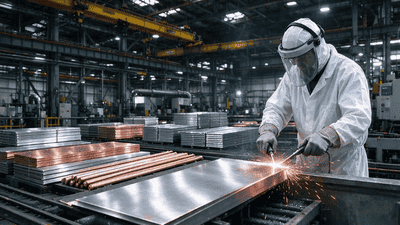
Copper and Palladium Prices: The Semi Manufacturing Cost Transmission
Semiconductor manufacturing is often described through advanced lithography, wafer fabrication, packaging technology, and massive investments in computing infrastructure. Yet beneath these sophisticated processes lies a less glamorous but highly important layer: raw materials and industrial inputs. Copper and palladium are two commodities that can provide useful signals about this underlying cost structure.

Credit Impulse and Semi CapEx: The 6-Month Lead
Semiconductor capital expenditure is one of the clearest expressions of confidence in the future of the technology industry. When chip manufacturers increase spending on fabs, equipment, advanced packaging, and production capacity, they are effectively making a multi-year commitment to expected demand. When they cut capital expenditure, the decision often reflects concerns about inventories, pricing, utilization, financing conditions, or the broader economic cycle.

Global M2 and Semi Cycle Bottoms: The Historical Overlap
Semiconductor cycles are often discussed through inventory, capacity utilization, memory pricing, capital expenditure, and end-market demand. Yet beneath these industry-specific indicators sits a broader financial variable: global liquidity. Changes in global M2, broadly interpreted as the amount of money and highly liquid deposits circulating across major economies, can influence the financial environment in which semiconductor companies operate. When liquidity expands, financial conditions may become more supportive for investment and risk assets. When liquidity contracts, valuation multiples, corporate financing, and technology spending can all come under pressure.

DXY and Asian Semiconductor Exports: The Seesaw Effect
The semiconductor industry in Asia sits at the intersection of two powerful forces: global technology demand and global financial conditions. While chipmakers, equipment suppliers, and electronics manufacturers are often analyzed through orders, inventories, utilization rates, and capital expenditure, currency movements can quietly reshape the economics underneath the entire export chain. Among the most influential variables is the U.S. Dollar Index, or DXY.

Treasury Curve Dis-Inversion and Semi Style Rotation
The Treasury yield curve is flashing signals again. Not the kind that make headlines, but the subtle shifts in slope, level, and curvature that professional fixed income traders watch like hawks. And for semiconductor investors, these signals matter more than most realize.

Fed Rate Hike and Chip Stocks: The Demand Anchor Paradox
Federal Reserve rate hikes are traditionally associated with pressure on growth stocks, tighter financial conditions, and weaker demand for economically sensitive products. Semiconductor equities appear particularly vulnerable because the industry combines high capital intensity, cyclical demand, elevated valuation expectations, and a global supply chain that depends heavily on credit and investment. Yet the relationship between higher interest rates and chip stocks is rarely straightforward.

AI Capex Debt Financing: The Rate Sensitivity of Hyperscaler Spending
The rapid expansion of artificial intelligence infrastructure has transformed capital expenditure into one of the most important macro-financial stories in the technology sector. Hyperscale cloud providers and large technology companies are committing enormous amounts of capital to data centers, accelerators, networking equipment, power infrastructure, cooling systems, and advanced storage. While much of this investment is supported by strong operating cash flow, the scale and speed of AI infrastructure spending have increasingly brought debt financing and interest-rate sensitivity into the discussion.

2026 Midterm Elections and Semi Policy Pulse: The Scenario Analysis
The 2026 midterm elections are shaping up to be one of the most consequential votes for the semiconductor industry in recent memory. While political drama dominates headlines, the real story lies in how different electoral outcomes will ripple through financial markets—interest rates, exchange rates, credit spreads, and commodity prices all stand to shift based on who controls Congress.